
 Ask Me
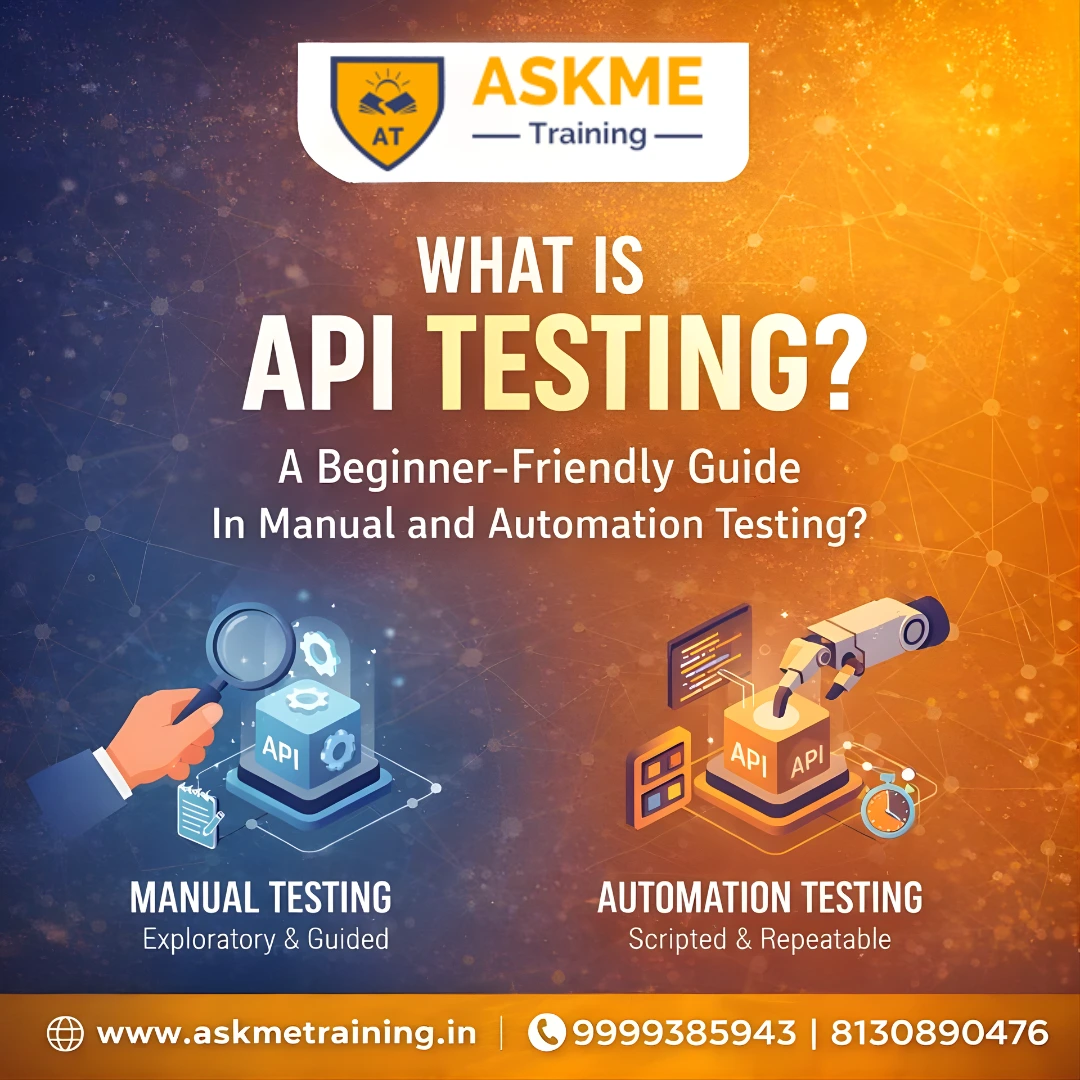
What Is API Testing in Manual and Automation Testing? A Beginner-Friendly Guide
- By Admin
- Posted on 05/01/2026
In today’s fast-paced software development world, applications are no longer built as single units. Instead, they rely on multiple services communicating with each other through APIs (Application Programming Interfaces). This makes API testing one of the most critical skills for modern QA professionals.
Whether you are starting your journey in software testing or planning to move into automation, understanding API testing in both manual and automation testing is essential. This beginner-friendly guide explains everything you need to know—from basics to tools, real-world examples, and career relevance.
What Is API Testing?
API testing is a type of software testing that focuses on verifying the functionality, reliability, security, and performance of APIs. Instead of testing the user interface, API testing validates the business logic layer of an application.
In simple terms, API testing checks:
- Whether the API returns the correct response
- If it handles valid and invalid inputs properly
- Whether data is transferred securely and accurately
Example:
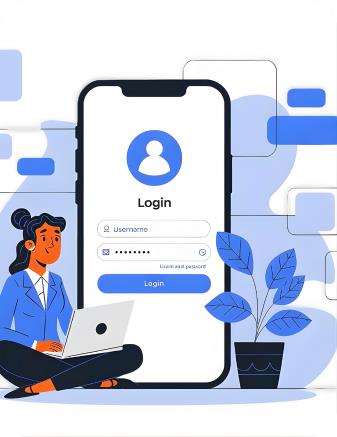
When you log in to an app, the UI sends a request to an API with your credentials. The API validates them and returns a response like “success” or “failure.” API testing ensures this interaction works correctly—even without a UI.
Why API Testing Is Important in Software Testing
API testing plays a vital role in the software testing lifecycle because:
- APIs connect frontend and backend systems
- Bugs at the API level can break multiple features
- API issues are cheaper to fix early than UI defects
- APIs remain stable even when UI changes
Key Benefits of API Testing
- Faster execution compared to UI testing
- Better test coverage of business logic
- Early detection of critical defects
- Suitable for CI/CD pipelines
For these reasons, API testing is considered a core skill for both manual and automation testers.
API Testing in Manual Testing
What Is Manual API Testing?
Manual API testing involves testing APIs by manually sending requests and validating responses without writing automation scripts. It helps beginners understand how APIs work internally.
Manual API testing focuses on:
- Request methods (GET, POST, PUT, DELETE)
- Headers and authentication
- Request body and parameters
- Response status codes and data
Tools Used for Manual API Testing
The most commonly used manual API testing tools include:
- Postman – widely used for beginners
- Swagger UI – API documentation and testing
- cURL – command-line API testing
- Insomnia – alternative to Postman
These tools allow testers to create requests, send them to APIs, and analyze responses easily.
Manual API Testing Example
Imagine testing a login API:
Request:
- Method: POST
- Endpoint: /api/login
- Body: username and password
Validation Points:
- Status code should be 200 OK
- Response should include a token
- Invalid credentials should return 401 Unauthorized
This approach helps testers validate API behavior without relying on the UI.
Advantages of Manual API Testing
- Ideal for beginners learning API concepts
- No coding knowledge required
- Easy to debug API behavior
- Helps understand request-response flow
Limitations
- Time-consuming for repetitive testing
- Not suitable for regression testing
- Limited scalability
This is where automation API testing becomes important.
API Testing in Automation Testing
What Is Automation API Testing?
Automation API testing involves writing scripts to automatically send API requests, validate responses, and generate test results. It is essential for large applications with frequent releases.
Automation testing ensures:
- Consistent test execution
- Faster regression testing
- Reliable CI/CD integration
Popular API Automation Testing Tools
Some commonly used API automation tools are:
- REST Assured (Java-based)
- Postman + Newman
- SoapUI
- Karate Framework
- JUnit / TestNG with API libraries
These tools allow testers to build scalable and maintainable API test frameworks.
Automation API Testing Example (Conceptual)
An automated test for a login API might:
- Send a POST request with valid credentials
- Validate status code 200
- Verify token format and expiry
- Assert response time
Once written, this test can be executed hundreds of times without manual effort.
Advantages of Automation API Testing
- Faster execution
- Ideal for regression testing
- Easy CI/CD integration
- Higher test reliability
- Supports performance and load testing
Challenges
- Requires programming knowledge
- Initial framework setup effort
- Maintenance needed when APIs change
Manual vs Automation API Testing: Key Differences
|
Aspect |
Manual API Testing |
Automation API Testing |
|
Execution |
Manual |
Automated |
|
Speed |
Slower |
Very fast |
|
Skills Required |
Basic API knowledge |
Programming + API skills |
|
Best For |
Learning, exploratory testing |
Regression, CI/CD |
|
Scalability |
Limited |
High |
Best practice:
Start with manual API testing to understand fundamentals, then move to automation API testing.
Types of API Testing You Should Know
API testing is not limited to functional testing. It includes:
- Functional API Testing – validates API behavior
- Security API Testing – checks authentication and authorization
- Performance API Testing – tests response time and load handling
- Integration Testing – validates interaction between APIs
- Validation Testing – ensures API meets business requirements
Understanding these types helps testers design better test strategies.
Real-World Use Cases of API Testing
API testing is used across industries such as:
- Banking and finance applications
- E-commerce platforms
- Mobile apps
- Cloud-based services
- Microservices architecture
In modern systems, APIs are often tested before UI development, making API testing a critical early-phase activity.
Career Scope of API Testing for Beginners
API testing skills significantly improve a tester’s career prospects. Companies actively look for QA professionals who understand:
- API fundamentals
- Manual API testing tools
- API automation frameworks
- RESTful services and JSON/XML
Many QA engineers start with manual testing and gradually transition into automation by learning API testing tools and frameworks.
How Beginners Should Start Learning API Testing
If you are new to API testing, follow this learning path:
- Understand API concepts and HTTP methods
- Learn REST architecture and status codes
- Practice manual API testing using Postman
- Explore real-world APIs
- Move to automation using REST Assured or similar tools
Structured training environments like AskMe Training often introduce API testing as part of a broader software testing roadmap, helping learners bridge the gap between manual and automation testing naturally.
Final Thoughts
API testing is no longer optional—it is a core testing skill for modern QA professionals. Whether performed manually or through automation, API testing ensures application stability, security, and performance.
By starting with manual API testing and progressing toward automation API testing, beginners can build a strong foundation and stay relevant in today’s competitive testing landscape. Investing time in learning API testing opens doors to better roles, faster growth, and long-term career success in software testing
