

 Askme Training
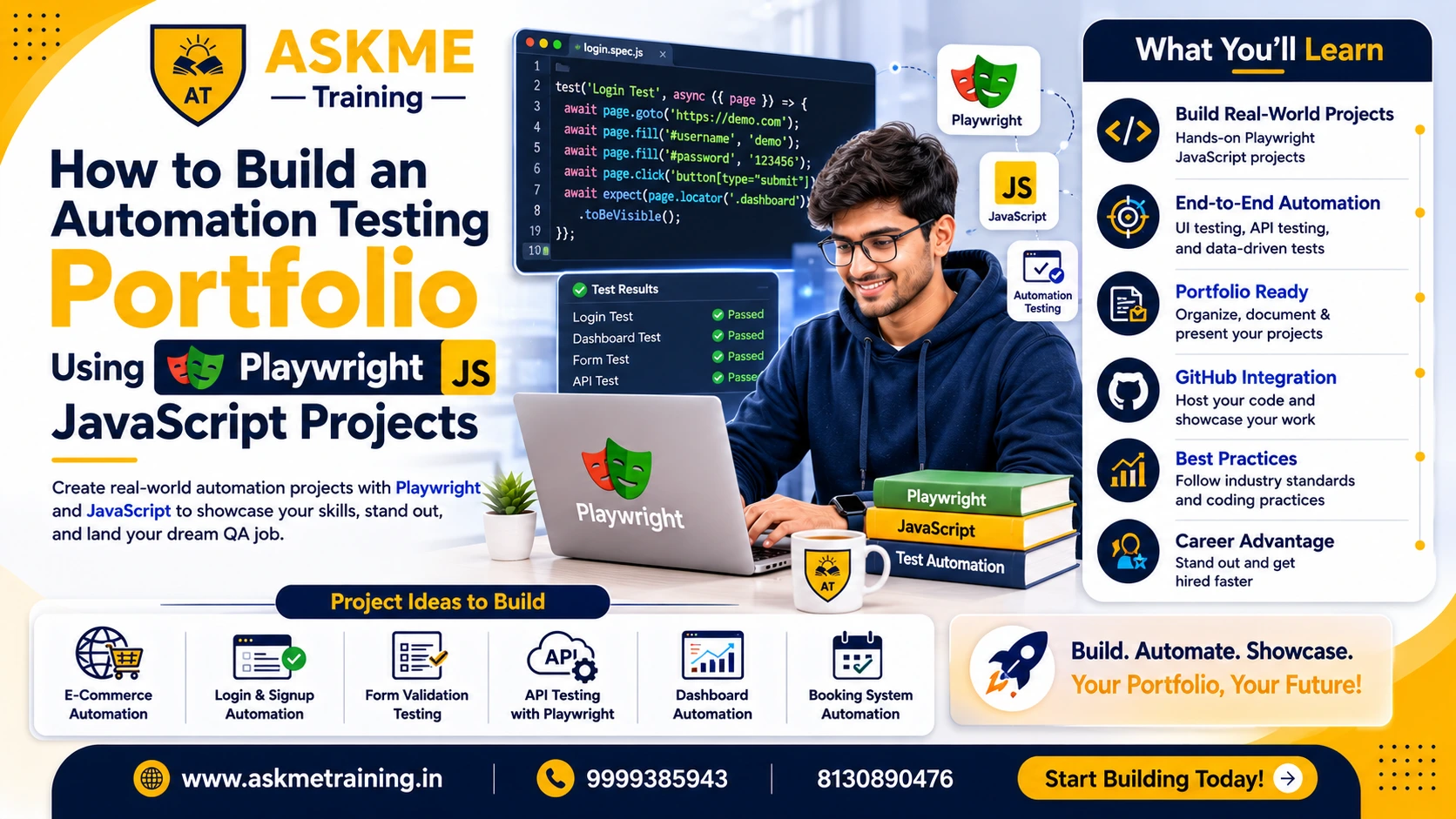
How to Build an Automation Testing Portfolio Using Playwright JavaScript Projects
- By Admin
- Posted on 29/07/2026
In today's competitive job market, recruiters want more than certifications—they want proof of your practical skills. A well-structured automation testing portfolio helps you showcase your ability to build real-world test automation frameworks and solve testing challenges.
Working on playwright automation testing with JavaScript real-time projects is one of the best ways to demonstrate your expertise. Combined with playwright automation testing online, these projects prepare you for real industry scenarios and improve your chances of landing an automation testing role.
Why an Automation Testing Portfolio Matters
A portfolio highlights your practical experience beyond your resume. It demonstrates your ability to:
- Develop automation frameworks using Playwright
- Write clean JavaScript automation scripts
- Implement the Page Object Model (POM)
- Perform UI and API testing
- Manage projects using Git and GitHub
- Generate test reports and integrate CI/CD
Quick Answer: A strong Playwright portfolio proves your practical automation skills and helps recruiters assess your job readiness.
Steps to Build a Strong Playwright Portfolio
1. Learn the Fundamentals
Before building projects, understand:
- JavaScript basics
- HTML & CSS
- DOM concepts
- Playwright framework
- Git & GitHub
A structured playwright automation testing online course with hands-on labs can speed up your learning.
2. Build Real-Time Projects
Create projects based on real business applications such as:
| Project | Skills Demonstrated |
| E-commerce Website | Login, Search, Cart, Checkout |
| Banking Application | Transactions, Validation |
| Flight Booking | End-to-End Automation |
| Healthcare Portal | Forms & Workflow Testing |
| API Testing | GET, POST, PUT, DELETE |
| Cross-Browser Testing | Chromium, Firefox, WebKit |
These playwright automation testing with javascript real time projects show recruiters that you can handle real-world automation tasks.
3. Follow Industry Best Practices
Every project should include:
- Page Object Model (POM)
- Reusable functions
- Data-driven testing
- Assertions
- Error handling
- HTML reports
- Screenshots
- Well-documented README files
- GitHub Portfolio Best Practices
Your GitHub profile is often the first thing recruiters review.
Include:
- Clear repository names
- Professional README documentation
- Project screenshots
- Installation steps
- Test execution commands
- Reports and results
- Meaningful commit history
A clean GitHub portfolio builds trust and showcases professionalism.
Common Mistakes to Avoid
Avoid these errors:
- Incomplete projects
- Poor folder structure
- Hardcoded test data
- Missing documentation
- No test reports
- Duplicate code
- No GitHub updates
Quality projects create a stronger impression than many unfinished ones.
Benefits of Real-Time Playwright Projects
Working on real projects helps you:
- Gain practical experience
- Improve JavaScript skills
- Understand industry workflows
- Build confidence for interviews
- Strengthen problem-solving abilities
- Create a recruiter-friendly portfolio
- Best Practices for a Job-Ready Portfolio
- Focus on quality over quantity.
- Build 3–5 complete projects if you're a beginner.
- Add UI, API, and cross-browser automation examples.
- Keep your GitHub profile active.
- Document every project clearly.
Continue learning through playwright automation testing online to stay updated with industry practices.
Key Takeaways
- A portfolio demonstrates practical automation testing skills better than certifications alone.
- Include diverse playwright automation testing with javascript real time projects such as e-commerce, banking, API, and cross-browser testing.
- Follow industry standards like POM, reusable code, reporting, and GitHub documentation.
- Real-time projects improve interview confidence and job opportunities.
- Continuous learning through playwright automation testing online helps you stay competitive.
Frequently Asked Questions
1. Why is a Playwright portfolio important?
It showcases your practical automation skills and helps recruiters evaluate your real-world experience.
2. How many projects should I include?
Beginners should aim for 3–5 well-documented, high-quality projects.
3. Which project is best for beginners?
An e-commerce automation project is ideal because it covers login, search, cart, and checkout workflows.
4. Is JavaScript required for Playwright?
Yes. JavaScript is one of Playwright's primary languages and is essential for writing automation scripts.
5. Should I upload projects to GitHub?
Absolutely. GitHub allows recruiters to review your code quality, documentation, and project structure.
6. Can online Playwright training help?
Yes. A structured playwright automation testing online course with live projects and mentor guidance helps you become job-ready faster.
7. What additional skills should I learn?
Git, REST APIs, SQL, CI/CD, and test reporting tools complement your Playwright expertise.
A professional automation testing portfolio is one of the most effective ways to stand out in today's hiring market. By building playwright automation testing with javascript real time projects, you demonstrate practical knowledge, problem-solving skills, and industry readiness. Pair your projects with a well-maintained GitHub profile, proper documentation, and continuous learning to increase your chances of securing automation testing roles.
Ready to build a portfolio that impresses recruiters?
Join Askme Training Institute's Playwright Automation Testing Program and gain hands-on experience through playwright automation testing with javascript real time projects, expert mentorship, interview preparation, and placement assistance. Enrol today and take the next step toward a successful automation testing career.
